Discover why Aluminum Foundry methods enhance modern casting projects
Wiki Article
The Duty of Aluminum Foundry in Enhancing Production Performance Across Diverse Sectors
Aluminum shops offer a crucial function in modern-day manufacturing by improving production effectiveness across different sectors. They harness progressed methods and sustainable methods to decrease and maximize workflows waste. The effect of Aluminum extends to industries such as auto, aerospace, and building, where its one-of-a-kind buildings enhance performance. The difficulties encountered by these foundries might form their future. Aluminum Foundry. Comprehending these characteristics discloses an intricate landscape of technology and adaptationThe Value of Aluminum in Modern Production
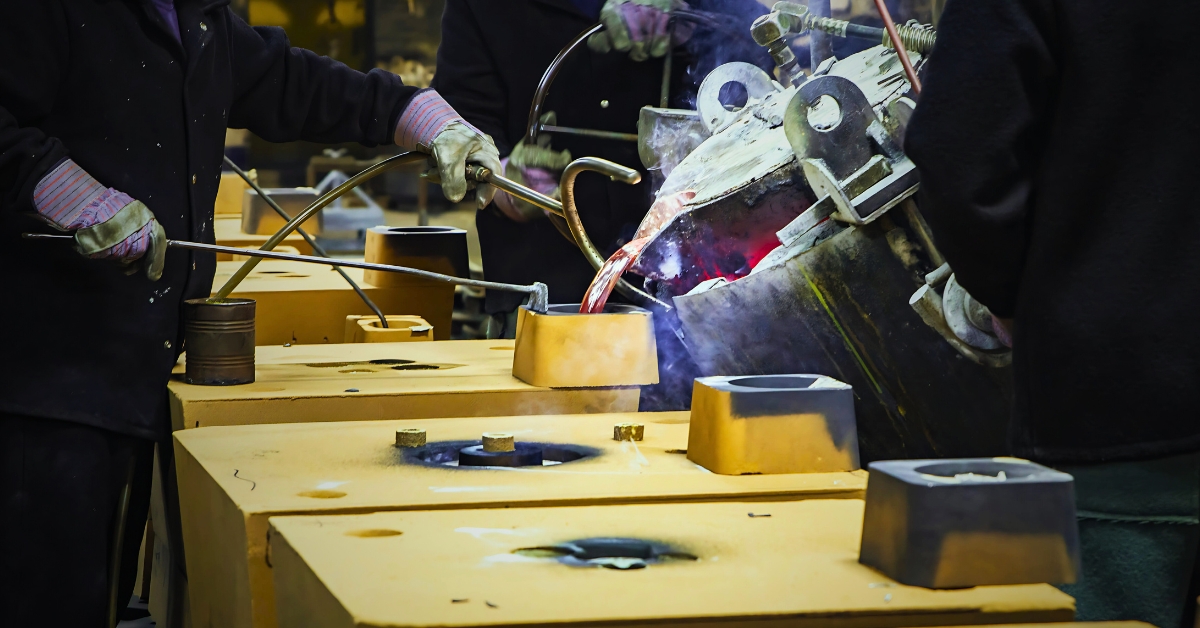
The flexibility of Aluminum enables a large range of fabrication strategies, consisting of machining, extrusion, and casting. Its recyclability better emphasizes its value, as recycled Aluminum requires significantly much less energy to generate than brand-new Aluminum, aligning with contemporary ecological goals. As markets remain to advance, Aluminum's distinct features and versatility guarantee it remains an important product for driving development and efficiency in producing procedures. Its contributions prolong beyond functionality, supporting financial development and sustainability initiatives around the world.
Key Procedures in Aluminum Foundries
In Aluminum foundries, several essential procedures are vital for attaining high production effectiveness. Melting and alloying methods, together with molding and spreading methods, play an important role fit the end product. Furthermore, applying stringent quality assurance determines guarantees that the outcome satisfies sector criteria.Melting and Alloying Techniques
Melting and alloying are fundamental processes in Aluminum shops, their performance substantially influences total production high quality and expense. The melting process normally includes making use of gas-fired systems or electrical heaters, which permit precise temperature control. This guarantees that Aluminum reaches its ideal melting point, minimizing energy consumption. Alloying, on the other hand, requires the enhancement of certain components to attain preferred material properties, such as toughness and deterioration resistance. Strategies such as pre-alloying and in-situ alloying are generally utilized to improve consistency and reduce waste. Careful monitoring throughout both melting and alloying phases is necessary, as it straight influences the material features and assurances compliance with market standards, inevitably causing enhanced production efficiency throughout different sectors.Molding and Casting Approaches
A variety of molding and casting approaches are important to the effectiveness and top quality of Aluminum factories. Among these methods, sand spreading, die spreading, and permanent mold and mildew casting attract attention because of their unique advantages. Sand spreading uses flexibility for intricate shapes and is cost-efficient for low manufacturing volumes. Die casting, recognized for its precision and repeatability, is ideal for high-volume production, providing outstanding surface area finishes and dimensional precision. Irreversible mold spreading combines the advantages of both sand and pass away casting, permitting far better mechanical homes and lowered material waste. Each technique offers details applications across diverse fields, enabling Aluminum factories to enhance manufacturing processes, decrease preparations, and fulfill differing customer demands successfully.Quality Assurance Measures
Assuring top notch Aluminum items calls for rigorous quality assurance measures at every stage of the Foundry procedure. These procedures start with the option of resources, where comprehensive testing for pollutants and structure is crucial. Evaluations during the molding and casting phases keep track of dimensions and surface quality to prevent defects once products are accepted. Advanced strategies, such as non-destructive screening, are utilized to discover internal defects that may compromise item honesty. Additionally, process control systems continuously monitor temperature level and alloy make-up to preserve uniformity. Last examinations, including mechanical building screening, verify that the products meet sector requirements. By implementing these stringent quality control methods, Aluminum factories enhance manufacturing efficiency and assure the reliability of their items throughout varied industries.Developments Driving Production Performance
Advancements in Aluminum foundries are revolutionizing production performance via sophisticated casting strategies and the combination of automation and robotics. These advancements not only simplify operations yet likewise boost accuracy and decrease waste. In addition, sustainable product innovations are adding to even more eco-friendly techniques within the market.Advanced Spreading Techniques
Numerous advanced casting strategies are transforming the Aluminum Foundry market, substantially improving manufacturing effectiveness. Approaches such as die spreading, sand spreading, and investment spreading have progressed, enabling increased accuracy and reduced waste. Developments like computer-aided layout (CAD) and simulation software make it possible for factories to enhance mold and mildew design and anticipate possible problems prior to manufacturing, reducing expensive errors - Aluminum Foundry. Furthermore, the usage of alloy growth techniques enhances material residential properties, bring about products that meet strict efficiency needs. Techniques such as rapid prototyping and 3D printing are also acquiring traction, assisting in faster turn-around times for intricate geometries. These innovations not just simplify production processes but also add to sustainability efforts by decreasing power usage and enhancing product use in the Aluminum casting marketAutomation and Robotics Combination
The integration of automation and robotics in the Aluminum Foundry sector is changing manufacturing efficiency. By using innovative robot systems for tasks such as molding, pouring, and ending up, factories are considerably reducing labor prices and lessening human error. Automated procedures improve production lines, permitting for faster turn-around times and consistent top quality in manufactured elements. Additionally, the execution of real-time tracking systems enables drivers to track performance metrics and maximize workflows proactively. Robotics also boosts safety by taking control of dangerous jobs, thereby lowering work environment crashes. As the innovation remains to develop, the Aluminum Foundry sector is poised to utilize these technologies even more, making certain competitiveness and responsiveness in a significantly demanding market.
Sustainable Product Innovations
As the Aluminum Foundry industry seeks to boost production effectiveness, sustainable product innovations are emerging as a crucial aspect. These technologies consist of the development of environment-friendly alloys and making use of recycled Aluminum, significantly minimizing the ecological influence of production procedures. Advanced techniques, such as additive manufacturing and environment-friendly spreading methods, enable factories to lessen waste while boosting material residential properties. Additionally, the assimilation of bio-based binders and coverings results in much healthier functioning settings and decreases discharges. The fostering of life process evaluation devices additional help foundries in determining sustainability chances, lining up with worldwide patterns towards accountable production. These advancements not only boost manufacturing performance however likewise position the Aluminum Foundry sector as a leader in lasting industrial practices.Environmental Sustainability in Aluminum Spreading
While Aluminum spreading has long been a staple in manufacturing, its environmental effect has prompted a shift in the direction of more sustainable practices. Several shops are now adopting green strategies to decrease waste and energy consumption. By making use of recycled Aluminum, factories substantially lower the requirement for virgin materials, therefore preserving natural deposits and decreasing greenhouse gas emissions.Advancements such as sophisticated melting technologies and boosted heating system designs furthermore improve energy performance. Executing closed-loop systems permits for the recycling of by-products and scraps, reducing garbage dump payments. Additionally, using water-based coverings and naturally degradable products in see the spreading process lowers hazardous exhausts and ecological toxic substances.
As markets progressively prioritize sustainability, the Aluminum casting sector is straightening with these values, demonstrating that financial development and ecological responsibility can coexist. This dedication to lasting practices not just profits the setting however additionally positions Aluminum shops as leaders in responsible manufacturing.
Applications of Aluminum Parts in Numerous Industries
Aluminum components are significantly used throughout various industries because of their special properties, which include lightweight strength, deterioration resistance, and exceptional thermal conductivity. In the auto industry, Aluminum is vital for generating lighter lorries, contributing to improved fuel performance and minimized discharges. The aerospace sector leverages Aluminum alloys for airplane components, taking advantage of their high strength-to-weight proportion, which improves performance and security.In construction, Aluminum is favored for windows, doors, and roofing due to its resilience and visual allure. The electric field uses Aluminum in navigate to this website power lines and elements, taking benefit of its conductivity and resistance to corrosion. In addition, the consumer items market utilizes Aluminum in packaging and household products, advertising sustainability through recyclability (Aluminum Foundry). Overall, Aluminum elements play a critical role ahead of time technological technologies and operational effectiveness across diverse markets, highlighting their importance in modern manufacturing and layout
Difficulties Dealt With by Aluminum Foundries
Numerous obstacles challenge Aluminum factories, affecting their effectiveness and efficiency. One considerable issue is the volatility of basic material rates, which can change unexpectedly, influencing operational prices and earnings margins. Additionally, foundries frequently come to grips with strict environmental policies, calling for pricey financial investments in sustainable techniques and waste administration systems. Labor lacks present one more hurdle, as the proficient workforce needed for specialized procedures ends up being progressively limited, resulting in possible delays and quality assurance issues.In addition, technical integration positions challenges; shops need to constantly adjust to developments in automation and digital devices to stay affordable. Inefficiencies in production procedures, such as poor melting and casting techniques, can also prevent outcome. The demand for tailored solutions across various sectors forces factories to stabilize adaptability with performance, making complex manufacturing timetables. With each other, these obstacles develop an intricate landscape that Aluminum shops have to browse to boost their total performance.
Future Fads in Aluminum Foundry Modern Technology
As the Aluminum Foundry industry advances, arising technologies are readied to transform production procedures and boost performance. Technologies in automation, such as robotics and expert system, are expected to improve operations, reduce labor prices, and enhance precision. On top of that, innovations in 3D printing technology will certainly permit the fast prototyping of intricate Aluminum components, decreasing lead times and material waste.Furthermore, the integration of IoT (Internet of Things) will certainly make it possible for real-time tracking of production procedures, permitting predictive upkeep and decreasing downtime. Sustainability will also play a crucial function, with a raising concentrate on recycling and energy performance in Foundry operations.

Frequently Asked Concerns
What Are the Prices Related To Aluminum Foundry Production?
The expenses connected with Aluminum Foundry production consist of basic material expenses, labor costs, energy usage, upkeep of equipment, and overhead. These aspects jointly affect the total economic practicality and effectiveness of the Foundry procedures.Just How Do Foundries Make Certain Quality Control in Aluminum Casting?
Foundries guarantee quality assurance in Aluminum casting via rigorous screening procedures, including material evaluation, dimensional assessments, and process tracking. Implementing standard procedures and utilizing advanced technologies helps maintain consistency and satisfy market specs throughout production.What Precaution Are Executed in Aluminum Foundries?
Safety procedures in Aluminum factories include individual safety tools, appropriate ventilation systems, regular security training, emergency protocols, and equipment upkeep. These techniques aim to reduce dangers, ensuring the health of employees and preserving operational performance.For how long Does the Aluminum Casting Process Generally Take?
The Aluminum spreading procedure usually takes numerous hours to numerous days, depending upon elements like the complexity of the layout, the size of the actors, and the specific techniques used by the Foundry.What Abilities Are Required to Work in an Aluminum Foundry?
To operate additional resources in an Aluminum Foundry, people need skills such as metallurgy expertise, machining efficiency, focus to information, problem-solving capabilities, and teamwork. Safety and security understanding and technological expertise in casting procedures are also essential for reliable operation.Its recyclability better highlights its relevance, as recycled Aluminum needs considerably much less energy to create than new Aluminum, lining up with modern environmental objectives. A variety of molding and spreading methods are essential to the efficiency and top quality of Aluminum foundries. Advancements in Aluminum factories are transforming manufacturing performance through sophisticated spreading methods and the assimilation of automation and robotics. Various sophisticated spreading techniques are transforming the Aluminum Foundry market, substantially improving manufacturing performance. Foundries guarantee high quality control in Aluminum spreading with strenuous testing methods, consisting of product evaluation, dimensional examinations, and procedure tracking.
Report this wiki page